

Key Takeaways
- Children often accept blurry vision as normal because they have nothing to compare it to.
- Vision problems can show up as behavioral or learning issues, not just eye complaints.
- Myopia rates among children continue to rise in 2026.
- Regular eye exams catch problems kids won’t report on their own.
Kids See the World Through Their Own Eyes, Literally
Your child has never seen the world through your eyes. If their vision has always been a little blurry, that blur feels completely normal to them. There’s no contrast, no “before” to compare it to. So they don’t complain. They just adapt.
Kids rarely flag a vision problem because they don’t know one exists. That’s what makes it easy to miss. A child who can’t see the board at school isn’t likely to say “my vision is blurry.” They’re more likely to lose interest, fall behind, or get frustrated without understanding why. By the time a parent notices something is off, the problem has often been there for a while. Signs of vision problems in children aren’t always obvious, which is exactly why routine eye exams matter so much.
Signs Your Child’s Vision May Need Attention
Physical Signs to Watch For
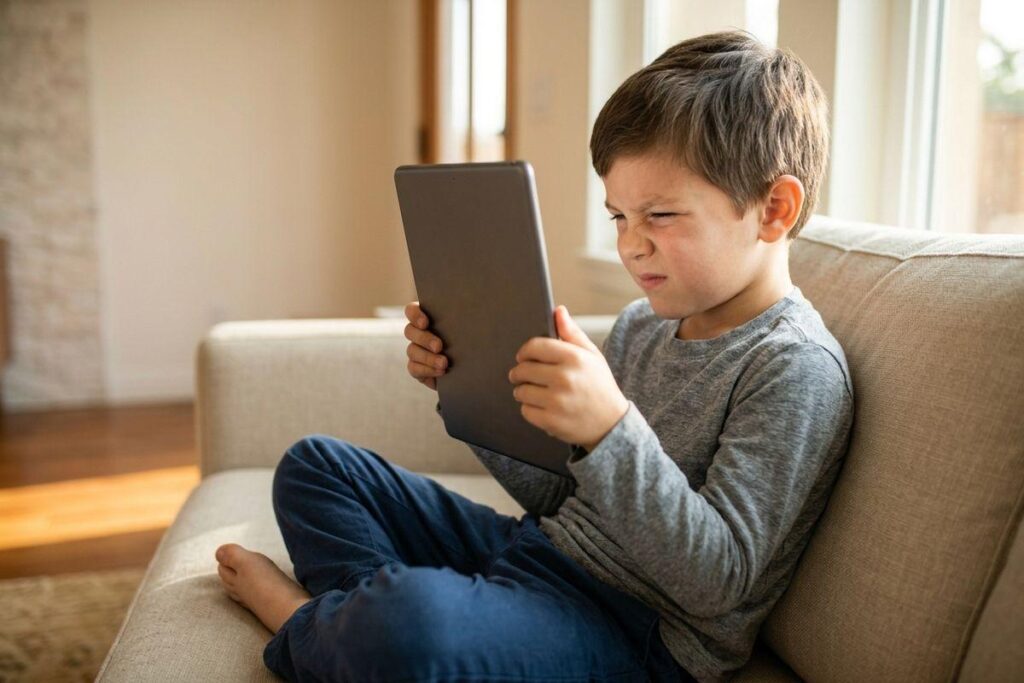
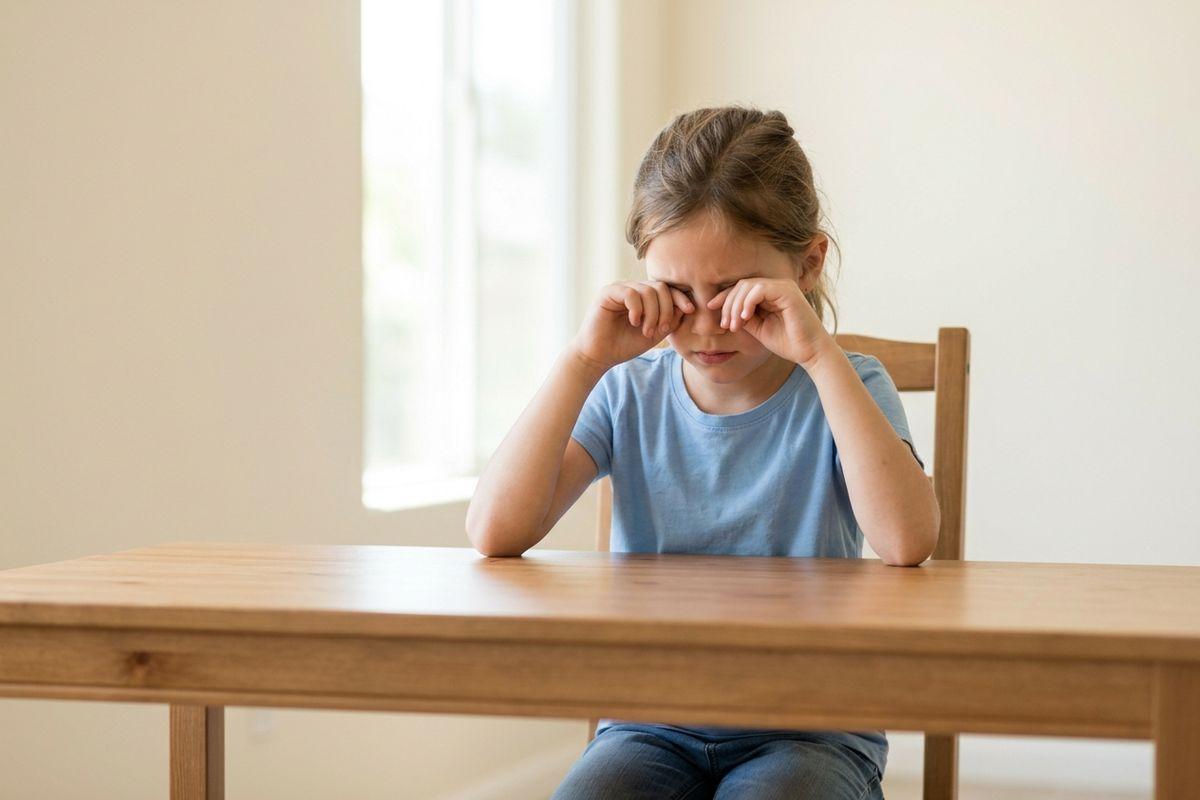
Some signs are easier to spot if you know what to look for. Squinting is one of the most common. It’s your child’s way of sharpening a blurry image without realizing that’s what they’re doing. You might also notice frequent blinking, rubbing their eyes, or tilting their head at odd angles when they focus.
Pay attention to how close they sit to screens or how they hold a book. Holding reading material just inches from their face isn’t a habit. It’s often a workaround. Headaches after reading or homework are another signal worth taking seriously. If you’re noticing excessive blinking in your child, that’s worth bringing up at their next exam.
Behavioral Signs That Are Easy to Miss
Not every sign is physical. Some show up in how your child acts at school or home. Trouble staying on task, losing their place while reading, or skipping lines can all connect back to vision. These behaviors often look like attention issues, which is why vision problems sometimes get misread as learning or behavioral ones.
Frustration, withdrawal, or acting out can follow when a child keeps struggling without understanding why. They’re not being difficult. They may simply not be able to see what they’re supposed to be working on. Eye tracking problems in particular can make reading feel exhausting in ways that are hard for a child to describe.
What Affects Eyesight in Kids
Myopia (Nearsightedness)
Myopia is one of the most common refractive conditions in children, and its numbers keep climbing. In 2026, more kids are nearsighted than ever before, with screen time and reduced outdoor activity widely associated with that trend. Research suggests time spent outdoors plays a meaningful role in reducing myopia risk in children.
With myopia, the eye grows slightly longer than it should. That extra length shifts where light lands inside the eye, pulling distant images out of focus. Your child can see their tablet clearly but can’t read the whiteboard from the back of the classroom. Traditional single-vision lenses correct the focal point on the retina, but the peripheral focus lands behind it, which can prompt the eye to keep growing longer over time.
Farsightedness and Other Common Conditions
Farsightedness works in the opposite direction. The eye is shorter, which makes close-up objects harder to see clearly. Some kids manage to compensate for mild farsightedness through extra focusing effort, which tires the eyes quickly and can contribute to headaches.
Amblyopia, or lazy eye, is another condition that develops in childhood and often has no obvious outward symptoms. One eye gradually becomes the dominant eye, while the other loses sharpness. Without an exam, it can go undetected.
How Vision Problems Affect Your Child Beyond Eyesight
Vision does more than let your child see clearly. It shapes how they learn, interact, and feel about school. Reading delays are one of the more direct connections. When letters move, blur, or overlap, reading becomes a chore instead of a skill that builds.
Because vision issues can resemble attention and behavior problems, some children get labeled as distracted or disruptive before anyone checks their eyesight. Addressing the root cause can shift a lot. A child who struggles to see clearly every day may pull back from activities they once enjoyed or avoid situations where their vision limitation is noticeable. Myopia control options for children have expanded, giving families more ways to manage progression before it affects daily life further.
What a Children’s Eye Exam in San Diego Can Catch Early
Why Regular Exams Matter More Than Waiting
School vision screenings are useful, but they’re not comprehensive. They typically check distance clarity and not much else. A child can pass a school screening and still have a meaningful vision problem. Waiting for your child to complain isn’t a reliable strategy either, since most kids won’t.
Your eye doctor can spot changes in your child’s vision before those changes affect their daily life. Early detection gives you more options and more time to act.
What to Expect During a Pediatric Eye Exam
A comprehensive children’s eye exam goes well beyond reading letters on a chart. The doctor checks how well both eyes work together, how your child’s eyes track across a line of text, and how quickly and accurately their eyes shift focus from near to far. These skills matter every single school day.
The exam is also an opportunity to check for early signs of conditions like amblyopia or astigmatism, which respond well to early care. There’s no guesswork involved. It’s a clear look at what your child’s vision is actually doing.
Schedule an Eye Exam for Your Child in San Diego
Your child won’t always tell you something feels off with their vision. But that doesn’t mean nothing is happening. The team at Total Vision Rancho Bernardo provides comprehensive pediatric eye exams designed to find what your child can’t put into words. If you’re looking for a trusted eye doctor in San Diego, schedule your child’s exam easily online today.
