
Key Takeaways
- Some children naturally outgrow their need for glasses as their eyes develop, but this depends on the type of vision problem.
- Myopia tends to get stronger through the teen years, not weaker.
- Farsightedness and astigmatism are more likely to improve with age.
- Early detection and consistent eye exams help catch changes before they affect your child’s daily life.
- Myopia management options can help slow how fast a child’s prescription increases.
What Every Parent Wants to Know
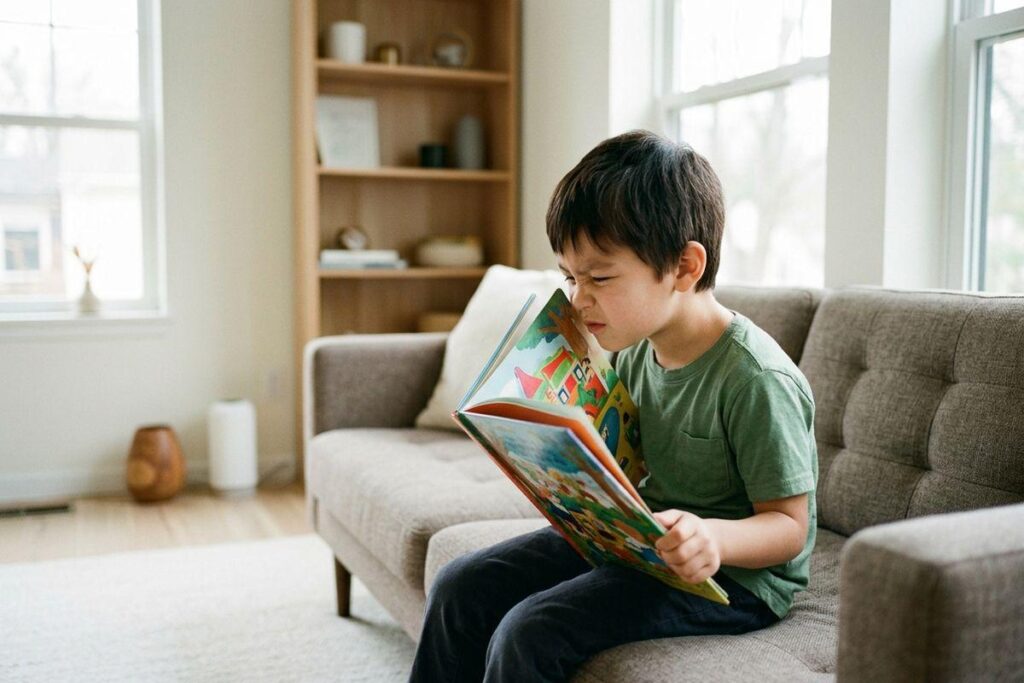
Your child comes home squinting at the board, holding a book two inches from their nose, or complaining about headaches after school. You get the prescription filled, they get glasses, and then comes the question every parent asks at some point: will they need glasses forever?
The honest answer is that it depends on what’s causing the vision problem in the first place. Some children do see their prescription shrink over time. However, most kids, especially those with myopia, tend to need stronger lenses as they grow.
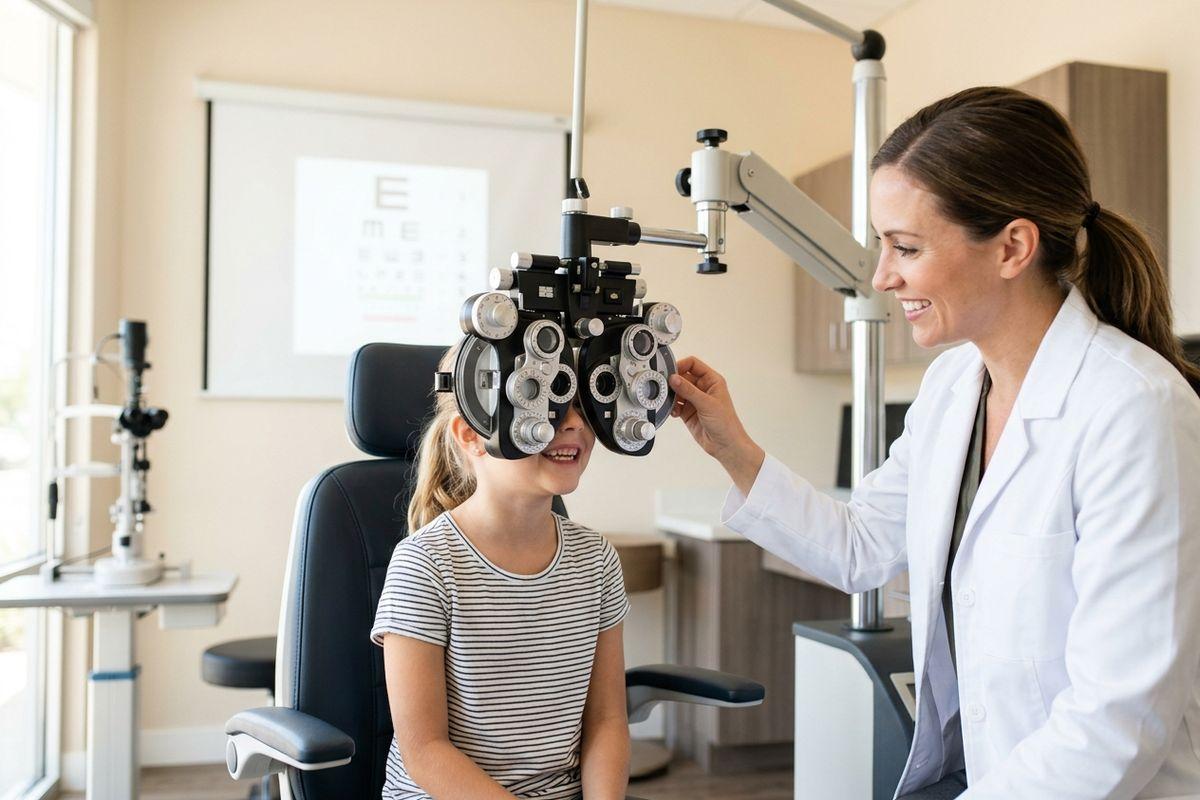
Understanding what to expect can help you plan ahead and make better decisions about your child’s eye care. As always, our team at Total Vision Rancho Bernardo is here to help, with children’s eye exams tailored to every stage of growth.
What Determines Whether a Child Needs Glasses
Most kids who need glasses have one of 3 common conditions. Nearsightedness, also called myopia, means distant objects look blurry. Farsightedness, also called hyperopia, makes close-up tasks harder. Astigmatism involves blurry or distorted vision at multiple distances.
All 3 of these conditions are linked to the shape of the eye. As children grow, their eyes do too, and these changes affect how their prescriptions develop. The key factor in whether a child outgrows glasses is how the shape of their eyes change over time.
Farsightedness and Astigmatism
Young children are naturally a little farsighted. As their eyes grow and lengthen, that farsightedness often decreases on its own. Some kids who needed glasses for farsightedness at age 5 find their prescription is much lighter or even gone by their early teens.
Mild astigmatism can follow a similar path. The shape of the eye changes as it grows, and in some cases, a child’s prescription may become less noticeable over time.
Nearsightedness
Myopia, however, moves in the opposite direction. Rather than fading with age, myopia tends to get stronger during childhood and into the teen years. If left unmanaged, this can result in strong adult prescriptions and an increased risk of more serious vision problems later in life.
Vision Problems That Need More Than Glasses
Lazy Eye and Crossed Eyes
Amblyopia, commonly called lazy eye, happens when one eye doesn’t develop normal vision, often because the brain starts favoring the other, stronger eye. Strabismus, or crossed eyes, occurs when a person’s eyes don’t point in the same direction. Both respond well to early treatment.
Treatment options can include glasses, patching the stronger eye to encourage the weaker one to work harder, or vision therapy. Catching these conditions early gives the visual system more time to respond to treatment, so regular exams during the preschool and early school years can have significant value.
Convergence Insufficiency
In some cases, children’s eyes don’t work together as a team. This is called convergence insufficiency, and it can make close-up activities exhausting, even when both eyes test fine on their own.
Convergence insufficiency is often treated with vision therapy, which involves guided exercises that train the eyes to team up properly. If you’re curious whether it’s effective, here’s a closer look at how vision therapy works and what it can address.
What Slowing Down Myopia Looks Like
While myopia can’t be reversed, we can slow down its progression. Myopia control options like orthokeratology (ortho-k) lenses, soft multifocal contact lenses, and low-dose atropine eye drops are all designed to reduce the rate at which a child’s prescription gets stronger. This helps protect their future vision.
In addition to professional treatments, research suggests that bright light exposure may reduce myopia risk. Having your child spend at least a couple of hours of outside time each day is a straightforward habit worth building.
When to Schedule Your Child’s Next Eye Exam
If it has been more than a year since your child’s last visit, or if something seems off with their vision, scheduling an eye exam is a straightforward next step. As your eye doctor in San Diego, Total Vision Rancho Bernardo can give you a clear picture of where your child’s vision stands and what, if anything, you should watch for going forward. Book your appointment online today.
