
Key Takeaways
- Screen time causes temporary eye discomfort, not permanent damage.
- Dry eye, blurry vision, and headaches are common signs of digital eye strain.
- Children are at a higher risk of developing myopia from extended screen use.
- Blue light from screens may disrupt sleep for some people but has not been shown to cause lasting eye damage.
- Simple habits like the 20-20-20 rule can reduce daily eye fatigue.
- Regular eye exams help catch vision changes before they become bigger problems.
Your eyes feel it after a long day of staring at a screen. That heavy, gritty, slightly unfocused feeling is real, and it’s worth paying attention to. But if you’ve wondered whether all those hours are doing lasting damage, our team at Total Vision Rancho Bernardo has the real answer.
Screen time can cause temporary eye discomfort, but current research does not show it leads to permanent eye damage. When you look at a screen, you tend to blink less than usual. Less blinking means your eyes dry out faster, and that dryness is what drives most of the irritation you feel. The good news is that with rest and a few simple adjustments, those symptoms tend to ease up on their own.
Signs Your Eyes Are Feeling the Strain
Common Symptoms to Watch For
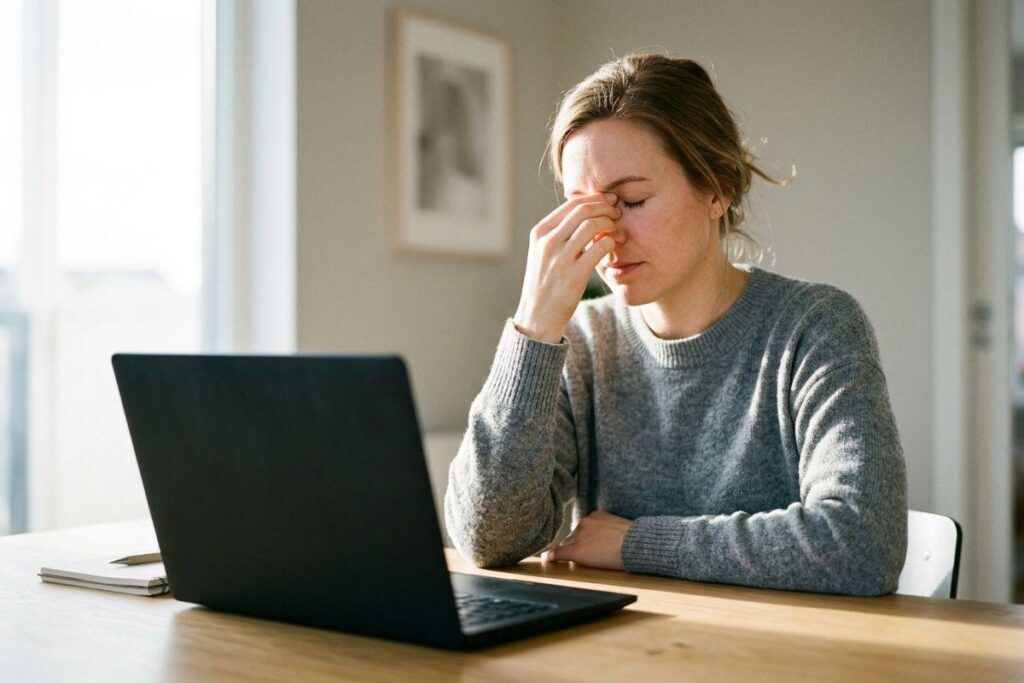
Digital eye strain doesn’t feel the same for everyone. Some people notice their vision goes slightly blurry by mid-afternoon. Others feel a dull headache building behind their eyes. You might even feel tension in your neck and shoulders from hunching toward your screen without realizing it.
Symptoms worth noting include:
- Dry, watery, or irritated eyes
- Blurry vision or headaches after screen use
- Neck and shoulder tension from prolonged poor posture
If these sound familiar, you’re not alone. Most people who spend several hours a day on devices experience at least one of these on a regular basis.
How Screen Time Can Affect Children’s Eyes
Children aren’t just small adults when it comes to screen time and eye health. Their eyes are still developing, and extended close-up work, including screen time, has been linked to a higher risk of developing myopia. Myopia, or nearsightedness, can happen when the eye grows longer than it should, making distant objects look blurry.
Spending more time outside can actually help slow how quickly nearsightedness develops in kids. It’s thought that natural light and the opportunity to focus at longer distances give young eyes a break from the demands of close work. For children under 2 years, keeping screen time minimal supports healthy visual development during a period when their eyes grow and change quickly. A children’s eye exam can help track those changes and detect concerns early.

Blue Light and Your Eyes
Blue light has become a buzzword in eye care, and it’s worth clearing up what it actually does and doesn’t do. Screens emit blue light, but the amount is a fraction of what you get from natural sunlight. So far, research has not shown that blue light from screens causes lasting damage to your eyes.
Where blue light may have a real effect is on your sleep. For some people, using screens in the evening can interfere with their body’s natural wind-down process, making it harder to fall asleep. That can be a legitimate reason to use night mode or dim your screen after sunset, though the goal there is better sleep, not eye protection. Blue light glasses have their fans, but they’re not required to keep your eyes comfortable during screen use.
If you’re dealing with persistent headaches or blurred vision, Neurolens glasses are another option worth asking about, since they address eye misalignment that can make screen-related discomfort worse.
Simple Habits That Give Your Eyes a Break
The 20-20-20 Rule
One of the simplest tools for managing screen fatigue fits neatly into your existing routine. It’s called the 20-20-20 rule: Every 20 minutes, shift your gaze to something roughly 20 feet away and hold it there for 20 seconds. That short pause gives your eye muscles a chance to relax, helping reduce eye strain. It takes almost no time and can make a difference in how your eyes feel by the end of the day.
Screen Setup and Daily Habits
How you set up your workspace matters, too. Positioning your screen about 25 inches away and at or slightly below eye level reduces strain on your eyes and neck during long sessions. Reducing glare from overhead lighting or windows also helps, since constant squinting adds fatigue faster than you’d expect.
On days when your eyes feel especially dry, over-the-counter artificial tears can help keep things comfortable. Night mode on your devices is a low-effort habit that’s easy to build into your evening. Small changes like these add up over time. If dryness is a recurring issue, dry eye therapy may address what simple habits alone can’t fix.
How an Eye Doctor in San Diego Can Help
Screen habits are worth addressing, but they’re only one part of the picture. A comprehensive eye exam can catch vision changes you might not notice on your own, like early shifts in your prescription or signs of strain that have been quietly building. Catching those changes early makes them easier to manage.
If your lifestyle involves a lot of screen time, there are lens options designed with that in mind. An eye doctor in San Diego can walk you through what makes sense for your specific situation, whether you’re working long hours at a desk or trying to figure out the right approach for your child’s changing vision.
Schedule Your Eye Exam
Our team at Total Vision Rancho Bernardo offers eye care for every stage of life, from young kids getting their first exam to adults and seniors managing complex prescriptions. Reach out to schedule an appointment and get a clear look at where your eye health stands.
